
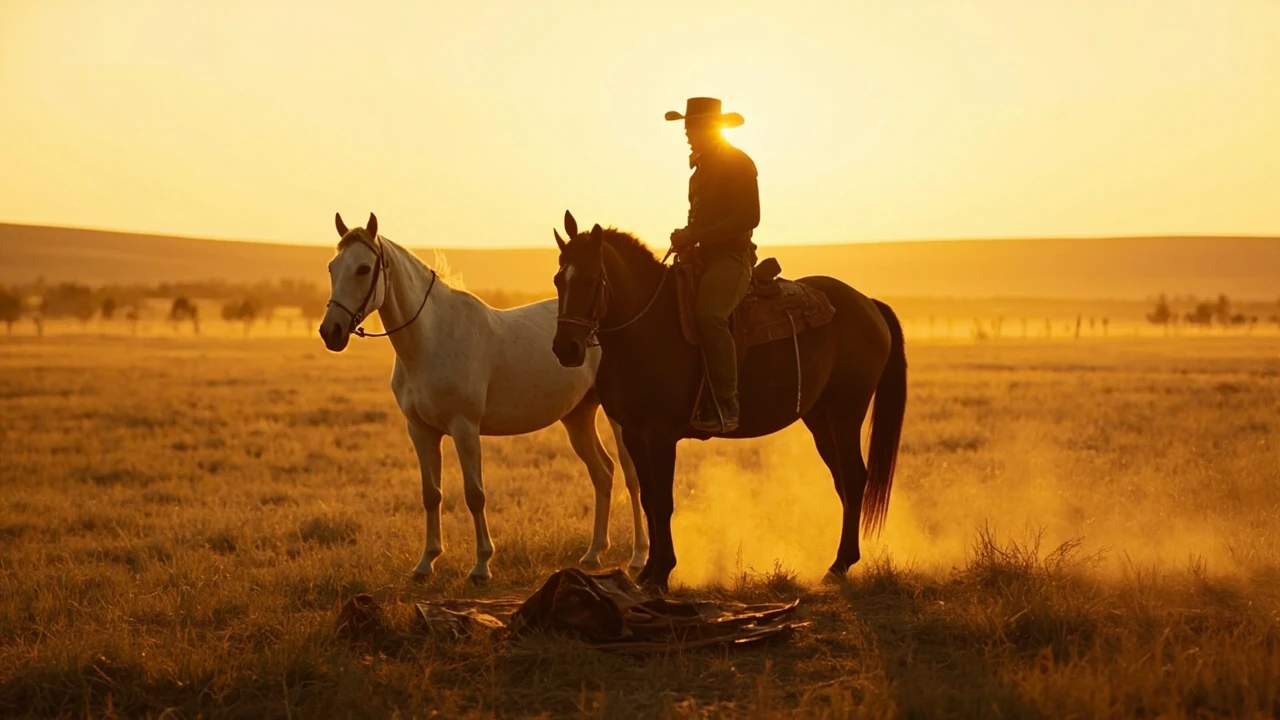
Best horse in RDR2: stats, breeds, and how to decide
The question of the best horse in RDR2 is less about a single hidden champion and more about which mount matches how you actually play. The game ships with nineteen distinct breeds, plus variants you can buy from stables and several you can only earn through specific missions, so the right answer depends on whether you care about raw speed, calm handling in gunfights, stamina for long rides, or story access. A player chasing fast travel will weight top speed and acceleration, while a player who spends more time in ambushes and law-heavy towns will weight bravery and health.
This guide breaks down how the underlying horse stat system works, which horses are widely considered the strongest in each role, and how to actually obtain the locked ones, including the three Arabian coats that require deliberate effort. You will also find a comparison table that ranks the strongest breeds across five attributes, a decision matrix for common playstyles, and a section on common mistakes that cost players their best mounts.
How the horse system actually works
Every horse in Red Dead Redemption 2 has a stat bar made of six values: Health, Stamina, Speed, Acceleration, Handling, and a hidden temperament that controls how often it panics under fire. The first five are visible in the stables when you inspect a horse, although the game shows a single colored bar per stat rather than a numeric value, which is why many players judge horses by feel after a few minutes of riding. Temperament only becomes obvious during combat and predator encounters, which is why two horses with similar visible stats can feel very different in a gunfight.
Horses fall into three rough roles, even though the game never labels them this way. Heavy workhorses prioritize Health and Stamina and tend to handle poorly in tight turns. Balanced riding horses trade a small amount of Health for cleaner acceleration and handling. Race-oriented horses have the top Speed and Acceleration but typically lower Health and Stamina pools, and many of them spook easily around gunfire or predators.
Bonding matters as much as the breed itself. As you ride, feed, brush, and calm your horse, your bond level increases from one to four. Each level unlocks new gear slots and circular maneuvers, and a max-bond horse becomes noticeably steadier in tense situations. The highest possible stat values are reached when you also feed your horse the right items, including hay, carrots, apples, wild carrots, and, for the best stamina restoration, the special horse meal crafted from specific ingredients. A bonded horse with the right diet can outperform the same breed with a low bond by a noticeable margin.
Two other mechanics shape which horse becomes the best horse in rdr2 for a given player. First, the saddle and stirrups you equip modify the horse’s stat bars by small percentages, and certain saddles are designed for speed while others protect the horse’s Health and Stamina. Second, horses can be customized at the horse station with different mane and tail styles, and even with a horse blanket, which affects how the animal looks but not its stats. Spending time on the saddle can be the difference between a horse that feels sluggish and one that feels like a true partner.
The top horse in each role
There is no single ranking that satisfies every player, so the honest approach is to name a top pick for each of the four roles the community generally agrees on. The table below lists the breed that most players and most guide coverage point to for each role, with the reason it leads and a note on how to obtain it.
| Role | Top breed | Why it leads | How to obtain it |
|---|---|---|---|
| Best overall | Turkoman | High Health and Stamina with strong Speed and Acceleration, balanced handling in combat | Available in chapter 6 at the Blackwater or Saint Denis stables |
| Best for combat | Missouri Fox Trotter | Excellent Speed and Acceleration, high Stamina, calmer temperament than race horses | Available from the Scarlett Meadows stable in chapter 4 onward |
| Best for exploration | Arabian (any coat) | Top-tier handling, high Stamina, refined acceleration, small frame that handles terrain well | Three locked variants, each tied to a specific location and a required mission stage |
| Best for story access | White Arabian | Available very early in chapter 2, the only high-stat horse you can claim before the main story progresses | Found near Lake Isabella during a specific side mission |
The Turkoman often appears at the top of broader rankings because it stays solid in every situation, which is the most useful answer for a player who wants one horse for the entire playthrough. The Missouri Fox Trotter feels faster in the saddle and is the right pick for a player who treats the map like a racetrack between towns. The Arabians, especially the White, Rose Grey, and Black coats, are the choice for players who value handling, refinement, and the satisfaction of taming a horse that is genuinely hard to find.
Two other breeds deserve a quick mention. The Thoroughbred has the highest Speed in the game but the lowest Health of any top-tier horse, and it panics easily, which makes it a poor choice for a main mount despite the appeal of pure velocity. The Ardennes is the opposite: extremely durable, calm under fire, but slow to accelerate and clumsy around obstacles, which is why many players use it as a pack horse rather than a primary mount.
Where each top horse actually lives
Knowing which horse is the best in its role is only useful if you can actually get it. Red Dead Redemption 2 ties several top horses to specific locations and even to story progress, so the order in which you unlock regions determines which mounts you can pick up at any given chapter. The list below gives the exact requirements for the breeds that matter most to the question of the best horse in rdr2.
- White Arabian: found during the mission “Exit, Pursued by a Bruised Ego” in chapter 2, located near Lake Isabella in the Grizzlies West region. The horse can be tamed and ridden back to a stable immediately.
- Rose Grey Bay Arabian: found in chapter 4 near the remote cabin in the far northwest of the map, above the letter “O” in the word “Ambarino” on the in-game map. Requires a high saddle and steady hands because the terrain is rocky.
- Black Arabian: found in chapter 4 inside the pen at the Saint Denis stable after a side mission unlocks the area, or in the wild near the Black River if the player explores carefully. Considered the highest-stat Arabian.
- Turkoman: bought at the Blackwater or Saint Denis stable once the player reaches chapter 6, where it appears in the catalog. The price is high, so the player usually needs completed story missions and a few side hustles to afford it.
- Missouri Fox Trotter: bought at the Scarlet Meadows stable from chapter 4 onward, with three color variants. A different breed, the Missouri Fox Trotter, also appears as a wild horse in the Heartlands but with lower stats.
- Thoroughbred: bought at the Saint Denis stable from chapter 4 onward, available in three color variants, and also a wild herd that can be found near the Heartlands and the plains west of Blackwater.
Two of the three Arabians can be lost if the player pushes too hard before saving them. Both the Rose Grey Bay and the Black Arabian can die in the wild before the player has reached a stable, so it is worth setting up a manual save nearby before approaching. The White Arabian is the safest of the three because the mission that introduces it does not require the player to leave the immediate area.
Why the Turkoman often wins overall rankings
The Turkoman sits at the top of most general rankings because it is the rare horse that scores well in every visible stat without a major weakness. Its Health bar is high enough to survive multiple predator attacks. Its Stamina is strong enough for long gallops across multiple regions. Its Speed and Acceleration are competitive with dedicated race horses, and its Handling is clean enough to navigate forest trails and town streets without fighting the reins. The temperament is also noticeably calmer than the Thoroughbred or the American Standardbred, so a Turkoman stays steady during shootouts where a less stable horse would throw the player off.
What tips the Turkoman over the Missouri Fox Trotter in the overall category is the Health pool. The Fox Trotter feels faster, but it takes more damage in combat and is more likely to bolt when a predator charges. For a player who does not want to micromanage the horse during long sessions, the Turkoman is the lower-friction choice. The only real downside is that the Turkoman is only available in chapter 6, which means the player has to make a stable, often lower-stat horse work through most of the story. The White Arabian is a common compromise: it is available in chapter 2 and its handling and Stamina are strong enough to carry the player through the entire story if bonded and equipped well.
Stat comparison: how the top horses line up
The exact numbers behind the colored bars are not displayed in the game, but the relative order of each stat is consistent across playtests and across community research. The table below summarizes the role leaders across the five visible stats, plus the temperament that affects how each horse behaves under pressure. Higher bars mean a stronger value, not a numeric value.
| Breed | Health | Stamina | Speed | Acceleration | Handling | Temperament |
|---|---|---|---|---|---|---|
| Turkoman | High | High | High | High | High | Calm |
| Missouri Fox Trotter | Medium | High | High | High | High | Calm |
| Arabian (White) | Medium | Very High | High | High | Very High | Calm |
| Arabian (Black) | Medium | Very High | High | High | Very High | Calm |
| Thoroughbred | Low | Medium | Very High | Very High | High | Skittish |
| Ardennes | Very High | High | Low | Low | Low | Calm |
| Mustang | Medium | Medium | Medium | Medium | Medium | Calm |
Red Dead Redemption 2 is the 2018 prequel to Red Dead Redemption, set in 1899 across a fictional open-world map that draws from the American frontier, the bayou country of Lemoyne, and the late-Victorian cities of the eastern United States. The game’s use of real historical detail is part of why its horses feel weighted, and the breed selection is grounded in the actual horse breeds of the period. A broader overview of the game’s setting, story structure, and the studio that developed it is available on the Red Dead Redemption 2 Wikipedia page, which collects the verified release details and production background that this guide is built on.
The values shown reflect consistent community observations of in-game behavior. The game does not expose exact numeric ratings, so any ranking you see online is a relative ordering rather than a precise score, and small differences between two horses of the same breed usually come down to bonding level, diet, and saddle choice rather than the breed itself.
How saddle and stirrup choice changes the picture
Two saddles in particular swing the balance between a balanced horse and a specialized one. The Lumley, available from the stables after a specific side mission, raises the horse’s Stamina core and Stamina regeneration rate. The McKinney, also a stable unlock, raises Speed and Acceleration at a small cost to Handling. For a Turkoman or an Arabian, the Lumley tends to make the horse feel more durable on long rides. For a Fox Trotter, the McKinney sharpens the existing speed advantage. Choosing the wrong saddle for the wrong horse is one of the most common reasons a player feels like a top horse is underperforming.
Stirrups are a smaller but real factor. The Hooded stirrups are the most protective option and are often recommended for players who take a lot of damage. The light racing stirrups trade a small amount of safety for slightly cleaner turning at speed. Most experienced players end up with one of two loadouts: a defensive saddle with Hooded stirrups for combat-heavy chapters, and a speed saddle with light stirrups for free-roam sessions once the main story is complete.
Common mistakes that cost players their best horse
Losing a top horse in Red Dead Redemption 2 is surprisingly easy, and the loss is permanent unless the player has a recent save. The list below covers the mistakes that come up most often in community discussion, and each one has a small mitigation that costs almost no time.
- Approaching a wild Arabian in the rain or near predator territory without saving first. A panicking horse can die before the player reaches a stable.
- Storing the main horse at a stable, switching to a temporary pack horse for a long mission, and then leaving the pack horse exposed during an ambush.
- Letting the horse take too much fall damage by riding at full speed off a cliff. Even top horses can die from a single bad jump, and the animation does not always give the player a chance to react.
- Failing to feed the horse during long rides, which drains Stamina to zero and can leave the horse vulnerable to predators or lawmen.
- Tying the horse far from a mission start and forgetting its exact position, then triggering a cutscene that teleports the player across the map.
The single most effective habit is a manual save before and after taming a wild horse, and another save after stabling it for the first time. The autosave is generous, but it usually does not protect a horse the player has only owned for a few minutes, and the loss of a top-tier mount because of a missing save is one of the most repeated complaints in player forums.
Picking the right horse for your playstyle
With the role leaders in mind, the most useful question is not “which horse wins” but “which horse matches how I actually play”. The matrix below maps four common playstyles to a recommended primary mount, plus one backup for situations where the primary is too risky to keep around, such as a long story mission with a high chance of losing the horse.
| Playstyle | Primary recommendation | Why | Backup |
|---|---|---|---|
| Combat-heavy outlaw | Turkoman | Stays calm during shootouts and survives predator attacks | Missouri Fox Trotter |
| Explorer and collector | Arabian (White or Black) | Best handling, high Stamina for long rides, calmer temperament | Turkoman |
| Speed-focused player | Missouri Fox Trotter | Top-tier acceleration, clean handling, lower friction in open terrain | Thoroughbred |
| Early-game player | White Arabian | Only high-stat horse available before chapter 4, fits the whole story | Hungarian Halfbred |
The matrix reflects how the horses behave in real play, not a theoretical ranking. A speed-focused player who picks a Turkoman will probably feel that the horse is too heavy in tight turns, while a combat-heavy player who picks a Thoroughbred will lose the horse more often than they want. Choosing the mount that matches the dominant activity is more important than chasing the horse with the single highest stat bar.
Bonding, diet, and why a maxed horse feels different
A horse at bond level 1 feels clumsy and skittish compared to the same horse at bond level 4. The game’s bond system rewards repeated riding, regular feeding, brushing after muddy rides, and the small calming interaction when the horse is nervous. The list below summarizes the practical gains the player gets from investing in bonding.
- Level 1: basic control, no extra gear, horse spooks easily around predators and gunfire.
- Level 2: first gear slot opens for a saddlebag, horse holds a steady walk and trot more reliably.
- Level 3: second gear slot for a holster or talisman, horse responds to “stay” commands with a better chance of staying put.
- Level 4: full gear set, calmest behavior, the best handling response, and the highest visible stat ceiling once the right saddle is equipped.
Diet compounds the bonding gains. Hay, apples, and carrots keep the horse fed. Wild carrots and the special horse meal, made from specific ingredients at a campfire, raise the Stamina core. Sugar cubes calm a panicking horse, and a calm horse is a horse that does not throw the player into a predator. Players who treat feeding as routine rather than optional end up with a horse that feels meaningfully better than the same breed with a low bond and a thin diet.
How to actually get the locked Arabians without losing them
The Arabians are the only set of top-tier horses that are not simply available for purchase, and the community has settled on a small number of reliable approaches. The list below is the safest order of operations, starting with the easiest horse to obtain and ending with the trickiest.
- Reach chapter 2, complete the prerequisite for the Lake Isabella side mission, then ride to the wild White Arabian. Use a lasso rather than chasing it on foot, and ride slowly to a stable to calm it down before leaving the area.
- Reach chapter 4 and travel to the far northwest cabin to find the Rose Grey Bay Arabian. Save before approaching, ride the horse along the road rather than across the rocks, and do not engage predators until the horse is at a stable.
- Reach chapter 4 and either buy the Black Arabian at the Saint Denis stable after unlocking it, or locate the wild Black Arabian near the Black River. The Saint Denis route is the lowest risk because the horse is already in a stable pen.
The wild variants, especially the Black Arabian near the river, can be lost to a single predator attack before the player reaches a stable. Saving before taming, riding along a road rather than cross-country, and avoiding any predator spawn until the horse is bonded at level 1 or higher are the three habits that protect the investment. Once a horse is stabled and bonded, it behaves like any other top-tier horse, and the difference is only the original effort to find it.
External context for the game and its world
What to do next once you have your horse
The horse system rewards players who invest in one mount rather than rotating through many. A good rule of thumb is to pick the role that matches the playstyle, commit to that breed for the rest of the story, and spend the freed time on bonding, diet, and saddle tuning rather than on collecting a new horse every chapter. The single biggest upgrade is almost always a bonded, well-fed Turkoman or Arabian with the right saddle, not a different breed entirely.
For a player who wants the safest progression, the order is straightforward. Get the White Arabian in chapter 2, ride it through the rest of the story, then replace it with a Turkoman or a Missouri Fox Trotter in chapter 6 once the better breeds are unlocked. For a player who wants the highest possible ceiling from the start, the Black Arabian in chapter 4 is the right call, with the same bonding and saddle investment applied from the first day. Either path covers the same final stat range, and the difference is whether the player values an early-game advantage or a later-game upgrade window.
The honest answer to “best horse in rdr2” is therefore a small set of names rather than one: the Turkoman for balanced play, the Missouri Fox Trotter for speed, the Arabian family for handling and exploration, and the White Arabian specifically for early access. Pick the one that fits how you ride, and invest the time in bonding, diet, and saddle choice. The breed sets the ceiling, but the bond is what actually determines how the horse performs across a full playthrough.
Frequently asked questions
What is the single best horse in rdr2 for most players?
For most players, the Turkoman is the best horse in rdr2. It has high Health, Stamina, Speed, Acceleration, and Handling, with a calm temperament that holds up in combat. The only real limitation is that the Turkoman only becomes available in chapter 6, so players who want a top-tier mount for the entire story start with a White Arabian and switch to the Turkoman later.
Can the best horse in rdr2 die permanently?
Yes. Any horse can die permanently if the player does not have a recent save. Horses in the wild can be killed by predators, by falling damage, or by lawmen, and stabled horses are not exposed to that risk. The most reliable protection is a manual save before taming a new horse and another save after the horse is stabled for the first time.
Where is the best horse in rdr2 located in the open world?
Three Arabians are the most notable wild horses: the White Arabian near Lake Isabella in chapter 2, the Rose Grey Bay Arabian near a remote cabin in the northwest in chapter 4, and the Black Arabian near the Black River in chapter 4 or at the Saint Denis stable after the relevant unlock. The Turkoman and the Missouri Fox Trotter are stable purchases, not wild encounters.
Do different saddles change which horse is the best horse in rdr2?
Yes. The Lumley saddle raises the horse’s Stamina core and Stamina regeneration, which makes a Turkoman or an Arabian feel much more durable on long rides. The McKinney saddle raises Speed and Acceleration at a small cost to Handling, which benefits a Missouri Fox Trotter or a Thoroughbred more than a balanced horse. The right saddle can make a breed feel like a different animal.
Is the Missouri Fox Trotter faster than the Turkoman?
The Missouri Fox Trotter feels faster in practice because of its lower body weight and quicker response. In raw Speed and Acceleration, the two horses are very close, but the Fox Trotter leans toward pure velocity while the Turkoman leans toward a balanced stat profile. For a player chasing the best horse in rdr2 for pure racing, the Fox Trotter is the better pick. For combat and exploration, the Turkoman is the safer pick.
Why do some players say the Thoroughbred is the best horse in rdr2?
Some players rank the Thoroughbred highest because it has the highest top Speed and Acceleration of any horse in the game. The downside is that it has the lowest Health of any top-tier horse, panics more easily around predators, and is more likely to throw the player during a chaotic fight. For a player who wants the fastest horse on open terrain and is willing to manage the risk, the Thoroughbred is competitive, but it is not the most forgiving choice.
Does the White Arabian stay useful through the whole game?
Yes. A bonded White Arabian with the right saddle keeps up with most other top-tier horses through the end of the story. Its Stamina and Handling remain excellent, and its calmer temperament means it holds up in combat better than the Thoroughbred or the Mustang. The only horses that meaningfully outclass the White Arabian at the end of the game are the Black Arabian, the Turkoman, and the Missouri Fox Trotter, and even then the difference is small.
How important is bonding for the best horse in rdr2?
Bonding is as important as the breed choice. A max-bond horse at level 4 has the cleanest handling, the calmest temperament, and the best stat ceiling. A low-bond horse of the same breed feels sluggish, panics in combat, and often refuses to follow commands. Most players who feel that the “best horse” is overrated have skipped the bonding step, and that single habit explains most of the negative reviews of any top-tier breed.
Is there any point in keeping a slow heavy horse like the Ardennes?
The Ardennes is useful as a pack horse rather than a primary mount. It has the highest Health of any horse in the game and can carry large carcasses back to a camp or a trader, which makes it valuable during long trader missions. Many experienced players keep a single Ardennes at a stable for hauling duty and use a faster horse for everything else.
What is the cheapest path to the best horse in rdr2?
The cheapest path is the White Arabian in chapter 2, because it is free and available very early. The Turkoman and the Missouri Fox Trotter both cost more than a thousand dollars and require reaching chapter 4 or chapter 6, so the Arabian route is the lowest-cost option for a player who wants a top-tier mount from the start. The trade-off is that the White Arabian is slightly behind the Turkoman and the Fox Trotter in raw Speed and Acceleration.


Leave a Reply