
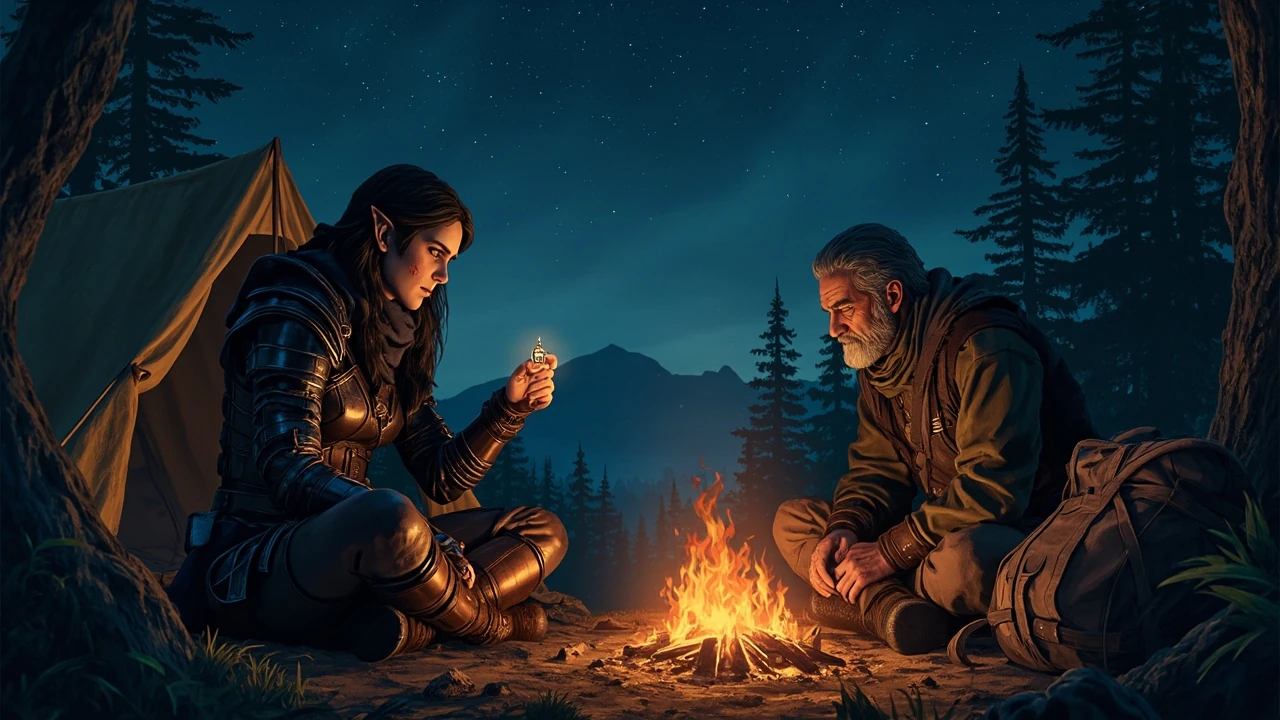
BG3 Shadowheart romance: a complete companion route walkthrough
Shadowheart is one of the most replayed companion arcs in Baldur’s Gate 3 because her story changes sharply depending on the choices you make in Acts 1, 2, and 3. Players who want a stable, predictable route often discover too late that a single dialogue pick at the goblin camp, a missed night scene, or an underused item can lock the companion out of the path they expected. The route is also tied to a quest that begins in Act 1, escalates in Act 2, and only resolves in Act 3, which makes the order of your decisions more important than any single roll.
This guide walks through the full companion arc for the bg3 shadowheart romance in the order a player actually plays it. It covers how approval works, which camp scenes are required, where the Nightsong decision fits, the major Act 3 branching point in the Lower City, the two relationship endings, and the small choices that decide which ending you see. Where the game uses random dice checks, the guide notes the difficulty class and the safer path, because the bg3 shadowheart romance is only fully available when you keep Shadowheart in your active party and return to camp often enough to trigger every key scene.
How Shadowheart’s approval system works
Shadowheart’s approval is a hidden numerical value that rises or falls based on dialogue, quest decisions, and party behavior. Her reaction is shown as a colored text prompt near the dialogue wheel: a green “Shadowheart approves” line means a meaningful gain, red means a strong loss, and neutral lines mean no change. The numerical threshold is not displayed, but the companion’s behavior in camp and the availability of late-game scenes track closely with a rising or falling trend across the campaign.
Because approval is per-character, party composition matters. If a different companion is the active speaker, Shadowheart still reacts to what your main character does, so leaving her in camp while the party resolves a major moral choice can still raise or lower her value. The system is weighted, not a simple counter: a single large decision can outweigh several minor approvals, and a betrayal near the Nightsong can erase gains built up across an entire act.
What Shadowheart generally approves of
- Showing respect for personal boundaries and not prying into her secrets before she volunteers them
- Defending companions who are mocked, threatened, or in obvious danger
- Choosing pragmatic but principled paths in quests, such as reducing needless killing in the goblin camp
- Encouraging her to trust her own judgment instead of obeying a cult or a god she has doubts about
What Shadowheart generally disapproves of
- Casual cruelty toward refugees, prisoners, or the obviously weak
- Openly worshipping or praising Shar in conversation, including agreeing with zealots about the Dark Justiciar path
- Pressing her for personal details when she has clearly asked you to stop
- Destroying sacred icons, especially the shrine in the Shattered Sanctum, purely for loot
Because the bg3 shadowheart romance requires a high-trust version of the character, the approval pattern is more important than any single quest. Decisions that look minor in dialogue, such as siding with the tieflings over the goblins, give compound gains that show up as approval in camp scenes two long rests later.
Act 1: building trust with the cleric of Shar
You meet Shadowheart on the road to the Emerald Grove, captured by goblins in a cage carried by a bugbear. Freeing her and inviting her to camp is the only way to recruit her. If you leave her bound, the companion route is closed for that playthrough. Once she is in camp, she sleeps in a separate area from the others, a small visual cue that her loyalty to you is not yet personal.
Required early-game choices
The first real test is the goblin camp. The bg3 shadowheart romance survives the goblin camp regardless of how much violence you use, but two specific decisions affect the rest of Act 1:
- Siding with the Emerald Grove refugees and helping Halsin. Shadowheart approves more strongly if you take a measured approach rather than encouraging slaughter.
- The decision inside the Shattered Sanctum. If you side with the goblins and kill the druid or the tieflings, Shadowheart’s approval drops sharply and several early camp scenes lose their warm variant.
After the grove stabilizes, return to camp and rest. The first required camp scene is triggered automatically after the goblin camp has been cleared. It is the conversation in which Shadowheart reveals that she is a cleric of Shar, and it is the first dialogue in which a high-approval response changes the texture of the scene. A sympathetic answer raises approval and unlocks the next night scene; a dismissive answer sets a colder tone that compounds through Act 2.
The tiefling party and the night scene after the grove
After the goblin camp is resolved, a celebration triggers in the Emerald Grove. Dancing with Shadowheart is optional but a strong approval gain, and several dialogues there foreshadow the artifact she carries. Returning to camp that night triggers a scene in which she touches the artifact and winces. The player can offer help, ask what she saw, or pull back. The bg3 shadowheart romance route is still active for all three options, but the help path opens a small additional dialogue the next morning that a hostile path closes off.
Act 1 night scenes you should not skip
Camp scenes in Baldur’s Gate 3 are tied to long rests, but they only fire when the party returns to camp and a specific story condition is met. Missing a night scene does not always lock the route, but skipping several in a row can lower the emotional ceiling of the bg3 shadowheart romance and remove unique dialogue lines from later acts.
| Scene | Trigger | Why it matters |
|---|---|---|
| Artifact dream | First long rest after recruiting Shadowheart | Establishes the personal stake in the artifact and introduces the wound on her back |
| Shar’s test | Long rest after clearing the goblin camp | Reveals her faith and gives the first real choice to support or question her |
| The tiefling celebration | Automatic after the grove is safe | First opportunity for a romance-coded interaction and approval gain |
| Healing her wound | Long rest after the grove celebration | Unlocks a permanent visual change to the artifact and the next major scene |
Each of these scenes requires a long rest to fire. Players who push straight from the goblin camp to the Underdark without returning to camp can arrive at the Act 1 ending with only two of the four scenes triggered, which weakens the bond going into Act 2.
Entering Act 2: the road to the Shadowfell
Act 2 begins when the party travels to the Moonrise Towers region. The map shifts to a darker palette, and the cult of Shar becomes a visible presence. The bg3 shadowheart romance arc reaches a turning point here because the quest the player has been tracing, finding the artifact’s source, converges with Shadowheart’s personal history as a Dark Justiciar trainee.
Finding the gauntlet of Shar
The gauntlet of Shar is a multi-stage trial in the Shar temple beneath the Shadowfell. It is required for the companion’s personal quest, and the trial’s three trials each raise approval when completed without exploiting them. A player who skips the gauntlet, for example by using a creative path or a persuasion check, can still progress but will not see one of the more revealing companion scenes in the temple.
| Trial | Requirement | Companion effect |
|---|---|---|
| Soft step | Walk across darkness without triggering light orbs | Approves careful, thoughtful approaches |
| Self-same | Solve a doppelganger puzzle in the mirror chamber | Approves creative solutions and accepting uncomfortable truths about yourself |
| Finger of death | Survive a gauntlet using a specific spell | Approves competence and preparation; can be done by a different party member without penalty |
Approach the gauntlet with Shadowheart in the active party. The dialogue she has while watching you solve the trials is part of the bg3 shadowheart romance, and the lines are unique to her. Swapping her out for a different caster is mechanically fine but loses the character interaction.
The Nightsong decision
The Nightsong, a captive under the temple, is the single most important decision for Shadowheart’s arc. Two paths exist:
- Freeing the Nightsong. Shadowheart’s artifact shatters, her eyes turn from dark to green, and her faith in Shar begins to collapse. This is the path the bg3 shadowheart romance route prefers and is required to reach the goddess-of-life ending.
- Handing the Nightsong to the cult. Shadowheart’s parents remain imprisoned, the artifact is preserved, and her Dark Justiciar path strengthens. This is the path to the Dark Justiciar ending and is also a valid route, but it is not the canonical romance ending.
If the Nightsong is killed during the encounter, the route to either companion ending is still possible, but the emotional arc is colder and several later dialogues lose their warm variant. There is no dice roll for the Nightsong decision itself, so the outcome depends entirely on the choice the player makes in the conversation with Shadowheart at the end of the gauntlet.
Act 2 night scenes after the gauntlet
After the Nightsong choice, a long rest triggers a major camp scene. If the Nightsong was freed, Shadowheart visits the player in a quiet, vulnerable moment that is unique to the bg3 shadowheart romance. The dialogue in this scene is the emotional pivot from Adventurer to Companion. The lines written here set the tone of every later conversation, including the Act 3 proposal scene and the epilogue.
If the Nightsong was sacrificed, the same scene fires but reads very differently. Shadowheart thanks the player for their help in the temple and quietly closes the door on her own doubts. Approval stays high, but the warmth disappears, and the Dark Justiciar ending is the only one available in Act 3. Players who are following the bg3 shadowheart romance specifically should treat the Nightsong decision as the load-bearing wall of the route.
Why the brothel scene does not derail the route
A common worry is that the companion who flirts with another character at a certain camp event can break the romance. In practice, the scene in question is written so that the player’s response determines how the moment is framed. A response that is honest and firm, for example “I am glad you told me,” preserves the bond and often raises approval. A response that mocks the other character or flirts back is treated as a soft betrayal, and a long rest after that scene can lock the player out of the next romance scene for that act.
Entering Act 3: Lower City and the two endings
Act 3 opens in the Lower City of Baldur’s Gate, which gives the player the most freedom in the whole game. The bg3 shadowheart romance reaches its final shape in this act, with three possible outcomes determined by earlier decisions and one final conversation.
Quest line in the Lower City
Shadowheart’s personal quest leads to a Shar temple under the city, a confrontation with her parents, and a final choice about what to do with them. The order of these steps depends on the Nightsong outcome. The two paths can be summarized in a single comparison table.
| Decision point | Path A: Nightsong freed | Path B: Nightsong sacrificed |
|---|---|---|
| Approach to Shar temple | Enter as a friend of the cult; several priests recognize Shadowheart and greet her | Enter as a Dark Justiciar candidate; cultists expect the artifact and reward the player |
| Parents in the prison | Parents are still alive; Shadowheart must decide whether to save them, abandon them, or kill them herself | Parents remain imprisoned; the player can free them as a kindness, but Shadowheart does not engage emotionally |
| Final conversation | Romance lock-in with a soft proposal scene at camp | Dark Justiciar conversion; romance scene is colder and the relationship becomes duty rather than affection |
| Epilogue | Partner in the player-owned house, traveling or settling | Leaving the party to serve Shar; a farewell scene replaces the partner ending |
The bg3 shadowheart romance has two valid endings and a third, the “alone” ending, which only triggers when approval has dropped too low to engage with either. Players who want a stable, satisfying outcome should aim for the goddess-of-life path, then make the parent decision that best fits the character they have been playing.
Detailed decision checklist for the parent quest
When Shadowheart reaches the prison in the Shar temple, she confronts her parents and asks the player what to do. The three options have different outcomes for the bg3 shadowheart romance.
- Save the parents: Shadowheart reconnects with her family, but they do not follow her out of the temple. The epilogue shows a quiet reunion at the player’s house. This is the most emotionally complete version of the path.
- Convince Shadowheart to abandon them: She walks away, and the parents are left in the prison. The scene is the most painful of the three and the most narratively honest, but the warm ending is still possible because the Nightsong decision is the more important variable.
- Allow Shadowheart to kill her parents: This is the only path that requires a high enough approval to trigger. It is a heavy scene, but the romance ending is still available and the dialogue is specific to the player, not to the cult.
None of these choices require a dice roll. They are conversation choices, and the difficulty comes from reading Shadowheart’s reaction in the moment and choosing the option that matches the role you have been playing for the last forty hours.
Companion gear, build, and combat role
Outside the story decisions, the bg3 shadowheart romance is also a mechanical exercise. Shadowheart starts as a Life domain cleric with a shield and a mace, and her combat role is to buff the party and provide healing. The build that most players settle on by Act 2 keeps her in medium armor with the Shield of Faith and Spiritual Weapon rotation, with a long-rest respec into a Light domain cleric if the Nightsong is freed.
Recommended early-game loadout
- Weapon: Mace or morningstar with a reach or plus-one enchantment as soon as one is available
- Shield: A shield that grants a save bonus or a +1 to AC; the Heater Shield from the goblin camp is a reliable starter
- Armor: Medium armor, upgraded to scale or half plate in Act 2; switching to the Nightsong set after the temple is common
- Spell loadout: Healing Word, Guiding Bolt, Cure Wounds, and Sanctuary for the early game
Recommended late-game loadout
After the Nightsong is freed, the goddess-of-life path opens a small set of unique items that fit the companion thematically. The two most common picks are a weapon that grants additional radiant damage and a piece of armor that boosts healing spells. The exact items depend on loot rolls and party composition, but the principle is the same: keep Shadowheart on a heal-and-buff rotation so the rest of the party can deal damage safely.
Common pitfalls that lock the route
The bg3 shadowheart romance is forgiving compared to some other companions, but a small set of missteps can still derail it. The pitfalls below are the ones that show up most often in player reports and patch notes.
Missing a required long rest
Every major scene in the arc is triggered by a long rest after a story condition. If a player rushes through an act without resting, the scene does not fire and the next one does not unlock. The most common version of this is reaching the Act 1 ending without having rested after the goblin camp, which skips the Shar’s test scene entirely.
Rejection of the proposal in Act 3
If the Nightsong was freed, Act 3 contains a soft proposal scene in camp. A response that breaks the relationship at that moment does not lock the path permanently, but it changes the epilogue and removes the partner ending. Players who want the romance ending should choose a kind, non-evasive answer in that scene, even if they intend to roleplay a slow-burn version of the relationship.
Romancing two companions at once
Several companions share the camp night scene structure, and it is possible to have high approval with more than one. The bg3 shadowheart romance does not become exclusive until the proposal scene in Act 3, but if the player has reached the proposal with another companion first, the Shadowheart scene shifts to a friendly conversation rather than a romance resolution. The simplest way to avoid this is to choose one target by the end of Act 2 and keep the other companions at a respectful distance in camp.
Accidentally siding with the cult
Some dialogue options in the Shar temple are written to be tempting but punish the player. Agreeing to convert a follower of Shar, helping a Dark Justiciar, or accepting a deal from a cult priest can be flagged as a betrayal and lower Shadowheart’s approval sharply. If the player’s roleplay calls for these choices, the Dark Justiciar path is still available, but the goddess-of-life ending is closed.
How difficulty affects the romance
Combat difficulty has no direct effect on the bg3 shadowheart romance, but it shapes the practical experience. On higher difficulty settings, a long rest is harder to spare, and players who rest less often can miss the camp scenes. Three adjustments help:
- Use camp supplies from merchants to allow rests without consuming a full ration, especially in Act 2.
- Move Shadowheart to the front of the party for the most story-heavy fights so her approval-triggered dialogue is more likely to fire.
- Save before each major camp scene; some scenes have a hidden random element that can be re-rolled with a reload.
On the lowest difficulty, the romance becomes more about the story than the combat, which is a legitimate way to play but does remove the tension that makes the gauntlet of Shar memorable.
Patch and version notes
Companion behavior in Baldur’s Gate 3 has been adjusted in several patches since release. Approval thresholds, the timing of camp scenes, and the availability of certain romance lines have all been tuned. The version you are playing should be the deciding factor when you read older guides, because the scene that fired after a specific quest in patch 5 may now fire after a different quest. The bg3 shadowheart romance has been stable across patches in its broad shape, but specific dialogue lines and the trigger order of the camp scenes have shifted. Always check the patch notes that ship with the version on your platform before assuming an older walkthrough still applies.
Mods and the romance route
Several mods add new dialogue, scenes, and items to the bg3 shadowheart romance. The most common are visual replacements for camp, additional camp dialogue, and gear mods that give Shadowheart unique items tied to her quest. Mods that change the quest’s resolution, for example by removing the Nightsong choice or forcing one of the two endings, can break the route. Players who use mods should keep a clean save before each major decision and use a single mod at a time when troubleshooting. The bg3 shadowheart romance is built on a sequence of hidden state variables, and a mod that changes one of them without updating the rest can leave the script looking for a scene that no longer exists.
Frequently asked questions
Can you start the bg3 shadowheart romance in Act 1?
The groundwork begins in Act 1, but the actual romance scenes start in Act 2. The companion’s approval is the gate, and the first scene that reads as romantic, the night conversation after the gauntlet of Shar, requires the Nightsong to be freed. The path is not finished by a single choice in Act 1, and trying to force it with high approval alone will not work.
Does the bg3 shadowheart romance require a specific race or class?
No. The companion’s romance is not restricted by race, class, or background. Origin characters have a few extra dialogue options but the canonical route is open to a custom character of any build. The mechanical structure of the path is the same for every player.
What happens if you save the Nightsong but fail the parent quest?
The Nightsong decision and the parent quest are independent. Saving the Nightsong opens the goddess-of-life path; failing the parent quest means Shadowheart leaves her parents in the prison. The romance ending is still available, but the epilogue reflects the loss. The bg3 shadowheart romance is most satisfying when both decisions are made with the same emotional logic.
Can you romance Shadowheart and another companion at the same time?
You can have high approval with several companions, but the proposal scene in Act 3 is exclusive. The first companion you reach the proposal scene with locks the romance for that playthrough. If you want the full bg3 shadowheart romance arc, choose Shadowheart as your target before Act 2 ends and avoid proposing in any other camp scene.
Is the Dark Justicar ending a real romance ending?
It is a real ending and a real relationship, but the tone is different. The Dark Justicar path keeps Shadowheart in your party and gives you a final camp scene, but the dialogue is colder and the epilogue shows her leaving to serve Shar. The bg3 shadowheart romance community treats the goddess-of-life path as the canonical route, but the Dark Justicar ending is a valid alternative for players who want to roleplay a darker character.
Do you need to long rest after every quest?
Not after every quest, but after every major quest that raises approval. The long rest is the trigger for the next camp scene, and skipping it delays the next beat of the story. A good rule of thumb for the bg3 shadowheart romance is to long rest after every goblin-camp, grove, and Shadowfell quest to keep the scenes on schedule.
What is the best party composition for the romance scenes?
Keep Shadowheart in the active party for every story scene. The other three slots are open, but the most common picks are a face character for dialogue, a healer so Shadowheart can move to support, and a damage dealer for the harder fights. Composition does not change the availability of the scenes, but a face-heavy party can resolve some of the harder dialogue checks more easily.
Can you change your mind about the Nightsong after the gauntlet?
No. The decision in the conversation with Shadowheart is final for the playthrough. There is no reload conversation, no late-game reversal, and no item that changes the outcome. The bg3 shadowheart romance route is shaped by this single choice, and the only way to see both versions is to play the game twice.
Does the bg3 shadowheart romance change in Honour mode?
The story and the scenes are the same in Honour mode, but a single failed long rest or a lost companion can lock the player out of scenes that require a specific party state. The safest Honour-mode strategy is to keep Shadowheart alive, avoid a total party kill, and rest at least once per act even if the camp supplies are tight. The mechanics of the romance do not change, but the cost of a missed scene is permanent.
Are there any spoilers-free hints if I want to discover the path on my own?
Three hints are enough to keep the route stable without spoiling the story. First, treat the artifact as a personal secret rather than a quest objective. Second, return to camp and rest after every major decision. Third, when Shadowheart asks a direct question, answer it as your character would, not as the most strategic option. The bg3 shadowheart romance is built around consistent, principled choices, and the cleanest path comes from playing the role rather than optimizing the variables.



Leave a Reply