
Los Bros steal a brainrot: how the heist mechanic works in Steal a Brainrot
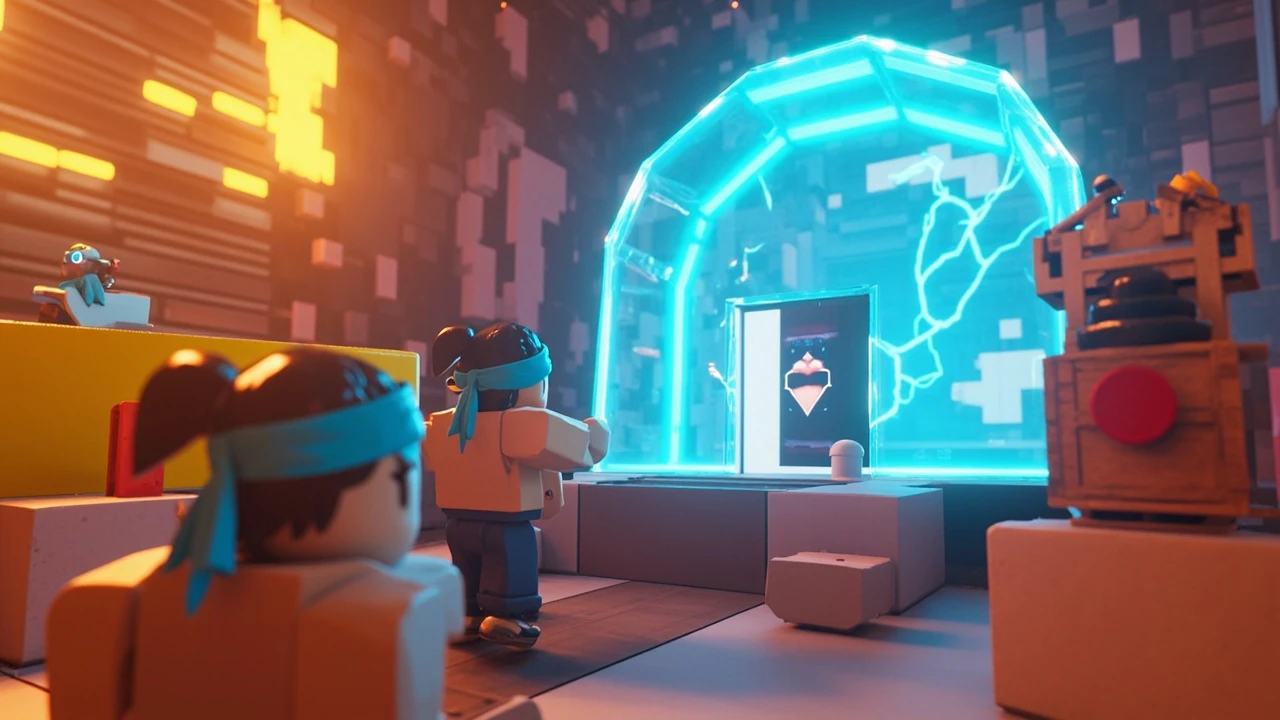
The phrase “los bros steal a brainrot” has become shorthand inside the Roblox community for the most disruptive heist tactic in the multiplayer game Steal a Brainrot. Two coordinated players, often wearing matching outfits or bandanas so teammates can tell them apart at a glance, push past a base shield, grab a high-value Brainrot character from its pedestal, and run it back to their own base before the victim can respond. The loop is simple in description and demanding in execution, and the tactic has become one of the defining reasons the game is compared to physical capture-the-flag sports rather than to traditional tycoon or farming sims.
This breakdown covers what actually happens during a los bros steal a brainrot run, why the duo approach tends to outperform solo attempts, and what players and developers can take away from the mechanic. It is written for Roblox players who want to execute the play more cleanly, for designers who want to understand why a “steal” verb paired with shared responsibility creates a viral loop, and for technical readers who want to see the game design decisions behind one of Roblox’s most successful multiplayer titles of 2025.
What “los bros” means inside Steal a Brainrot
Inside Steal a Brainrot, “los bros” is a community nickname, not an official in-game class, NPC, or developer label. The phrase refers to two or more players who queue up together, coordinate through voice chat or text, and run coordinated thefts against a target base. The name comes from Spanish-language slang in which “los bros” simply means “the bros” or “the guys,” and the same lingo is used in other Roblox titles when a duo or squad operates as a unit. The expression has spread because the strategy itself is one of the cleanest ways to break an opponent’s economy: one player draws attention, the other grabs the Brainrot, and both run.
Because the term is community-driven, it carries no stat bonus, no unlock condition, and no formal reward. It is best understood as a tactic label rather than a character archetype. Anything that requires two players, a target base, and a shared plan can be described as a los bros steal a brainrot attempt, regardless of the specific characters being run.
The slang also carries a layer of social identity. Clips tagged with “los bros” tend to feature crews that have been running together for weeks, often with a shared Discord and a stable role split. New players sometimes adopt the phrase before they have a partner, which leads to a fair amount of “LF los bros” recruitment messages in Roblox group chats and on X. That social layer matters because the tactic only works at full strength when both players have built up a shared sense of timing, and that timing only comes from repetition against real defenders rather than against practice dummies.
It is also worth noting that “los bros” is not a protected name. Any duo can claim it, and the same phrase is sometimes used ironically by solo players who manage to clear a base on their own. The community has generally accepted that flexibility, because the underlying mechanic is what matters, not the label on top of it.
The basics of stealing a Brainrot
Before the duo tactic is useful, it helps to understand the underlying steal loop, because the duo strategy is built on top of single-player rules.
- Acquire a Brainrot: Players buy voxel characters from a conveyor belt that bisects the map, or steal one from another player’s base. Characters are based on the 2025 Italian brainrot meme aesthetic and generate passive income for the owner.
- Store it at a base: Each player owns a base where acquired Brainrots sit on pedestals and accrue currency. The base is the only place a Brainrot can be safely stored between runs.
- Defend the base: A wall-mounted button generates a temporary shield that blocks entry. Traps and defensive gear can be purchased from the in-game store using currency or Robux, Roblox’s premium currency.
- Rebirth for stats: Players can reset progress in exchange for better stats and additional currency, which is how long-term accounts scale their earning power.
With those rules in place, stealing a Brainrot is the inversion of every defensive measure. The attacker has to enter a base, pick up a character, and exit before the defender reacts. The defender has to either keep the shield up, scare the attacker off, or punish them on the way out. The verb “steal” is doing real work here: the game names the action, ships a dedicated button for it, and lets the entire late-game economy hinge on whether you can do it faster than the defender can react.
One detail that often confuses new players is that a Brainrot is not a single item but a class of items, each with its own generation rate, its own visual, and its own rarity. A common Brainrot from the conveyor might pay a few hundred currency per minute, while a rare event drop can pay orders of magnitude more. That range is what makes a successful steal feel meaningful: the target matters, and a crew that learns to read pedestals before committing to a run has a much better expected return than a crew that just rushes the first base they see.
Why a two-player crew changes the math
Solo theft in Steal a Brainrot is possible but punishing. A single player has to deal with the shield, the trap layer, the time it takes to grab a character, and the exit path all at once. A coordinated duo can split those jobs, which is why los bros steal a brainrot attempts have become the dominant competitive format at higher levels of play.
The split typically follows one of three patterns, each with different risk and reward profiles.
| Crew role pattern | Player 1 job | Player 2 job | Best target | Main risk |
|---|---|---|---|---|
| Distraction + grab | Draws defender attention, baits the shield, or triggers a trap on purpose | Slips through a side or back entrance and lifts the Brainrot off its pedestal | Defenders with one shield button and limited gear | Distraction gets caught and trapped, leaving the second player outnumbered on the exit |
| Double entry | Hits the front door to force a shield or trap use | Times entry to the second the shield cycle ends | Bases with predictable shield timing | Defender uses a longer shield cycle than expected and re-shields mid-attempt |
| Relay run | Picks up the Brainrot and starts the carry | Blocks, kites, or lays traps behind the carrier to slow any defender chase | High-value targets where the carry distance is long | Carrier gets separated and the defender catches them in the open |
All three patterns share the same engine: two people splitting a job that one person would fail. That is the design lesson behind los bros steal a brainrot, and the same lesson carries into other Roblox games that lean on coordinated PvP, like the trap layering seen in ARC Raiders, where timing and zoning matter more than raw stats.
There is also a hidden fourth pattern that more experienced crews use, often without naming it: the bait-and-fake. In that variation, the distractor announces the entry by jumping on a known pressure plate, the defender burns the shield on the decoy, and the second player walks in through the main door two seconds later because the defender has already committed. It only works against crews that react by reflex, but against newer defenders it is one of the cleanest ways to get a high-value Brainrot without taking any damage at all. The reason it does not show up in most guides is that it stops working as soon as the defender learns to wait before pressing the shield button, which is exactly the kind of arms race the game is built around.
A step-by-step walkthrough of a typical los bros steal a brainrot run
Run order varies by base layout, but most successful duo thefts in Steal a Brainrot follow a similar sequence. The following is a generalized workflow built from documented community clips and in-game observations, not a script that any single developer has shipped.
- Scout the target. One player walks the perimeter of the chosen base to check the shield cycle, count pedestals, and identify the most valuable Brainrot on display. The other player watches from a distance to confirm the defender is not already in a defensive stance.
- Trigger the shield on purpose. The distractor hits the front door or jumps onto a known pressure plate. The defender is expected to push the shield button to block entry. The crew is now on a clock because the shield has a fixed duration.
- Reposition before the shield drops. The second player moves to a side or rear approach while the shield is still up. Entry points that are usually ignored become the cleanest path because the defender is watching the main door.
- Enter as the shield ends. The crew counts the shield duration and crosses the threshold in the last half-second before it fades. This is the moment most solo attempts fail, because a single player cannot trigger the shield and time the entry alone.
- Grab and run. The second player lifts the target Brainrot off its pedestal. In most clips, the grab animation locks the player in place for a short window, which is the most dangerous moment in the whole run.
- Exit with cover. The distractor lays a trap behind the carrier or kites the defender away from the exit. If the defender is alone, the relay pattern works. If the defender has help, the run usually ends at this step.
- Convert and reset. The carrier deposits the stolen Brainrot in their own base, where it now generates income for the crew. Both players return to scouting for the next target.
The sequence looks tidy on paper, but every step has a failure mode. Step 4 is where a slow shield cycle ruins the run. Step 5 is where a defender with a fast reaction steals the steal. Step 6 is where a third party crashes the crew and turns a heist into a fight. Each of those failure modes has its own counter, which is why the most reliable crews run the same base two or three times in a row before moving on: the first run is reconnaissance, the second run is calibration, and the third run is the actual heist.
There is also a timing detail that does not show up in clip highlights: the carry path. Once a Brainrot is lifted, the carrier cannot teleport, cannot use most store items, and runs at a slightly reduced speed compared to a player without a payload. A defender who has memorized the longest possible line between the pedestal and the base exit can turn a 3-second grab into an 8-second exposed run, and that difference is often the only thing standing between a successful heist and a feed.
Defensive counters and why they matter for designers
Defending a base in Steal a Brainrot is its own skill tree, and the meta around it changes every time a new trap or item ships. From a player perspective, the goal is to make any los bros steal a brainrot attempt cost more than it pays. From a design perspective, each counter is an attempt to keep the steal loop from collapsing into a single dominant strategy.
| Defense | What it does | Effect on a duo run | Counter from attackers |
|---|---|---|---|
| Shield button | Generates a temporary barrier around the base | Forces a wait or a bait, buying the defender time | Time the entry to the shield window and use a distractor to bait an early press |
| Traps | Damage or immobilize players who step on a pressure plate | Can wipe a solo attacker; rarely wipes a coordinated duo because the distractor can eat one trap | Relay run with a dedicated trap clearer, or alternate approach vectors |
| Store gear | Defensive items bought with currency or Robux | Adds layered defense beyond the basic shield and trap slots | Scout the base first, then choose a target that has not maxed gear |
| Rebirth stats | Reset progress in exchange for better stats and additional currency | A high-rebirth defender can out-DPS or outrun a low-rebirth crew | Crews also rebirth, so the matchup often comes down to rebirth parity |
| Alliance play | Informal cooperation with nearby bases to call out incoming crews | Turns a 1v2 into a 2v2 or worse, which is usually a losing trade for attackers | Pick a target outside the alliance net, or pick a moment when the ally is offline |
The interesting design takeaway is that the shield, traps, gear, and rebirth systems all interact. A solo defender with low rebirth but good gear can still hold off a duo, while a high-rebirth defender without traps can be timing-broken by a patient crew. That interaction is exactly the kind of layered counterplay that has kept Steal a Brainrot at the top of the Roblox charts, alongside the gardening sim Grow a Garden, which uses a different but comparably sticky loop.
For designers, the most useful frame is to think of each defense as a cooldown rather than a wall. The shield has a duration and a cooldown. Traps have a placement limit and a cost. Gear has a slot count and a Robux or currency price. Rebirth has a reset cost. Alliance play has a coordination cost. None of these defenses are absolute, and that is the point. A defense that cannot be beaten by a smart attacker will eventually push the player base toward a single dominant build, and a single dominant build is what kills a multiplayer game’s lifespan.
The viral loop and why the phrase caught on
Theft mechanics in multiplayer games are not new. What made los bros steal a brainrot a viral phrase is a combination of three things: a clear visual identity, a cooperative skill ceiling, and a payoff that is visible to spectators.
- Visual identity: The duo wears matching outfits, often bandanas, so a viewer can tell at a glance who is on which side. The Brainrots themselves are exaggerated voxel characters, which makes the moment of grab and run read clearly on small phone screens.
- Cooperative skill ceiling: A solo steal is possible, but a duo steal is dramatically more reliable. That gap rewards the kind of coordination that viewers love to see in clips, especially when voice chat is involved.
- Spectator payoff: The defender’s reaction is part of the show. Clips of upset players losing a high-value Brainrot at the last second have driven a lot of the game’s social media reach, and that reach feeds back into more players trying the tactic.
That feedback loop is the same one that powers Steal a Brainrot‘s broader popularity. The title is the only Roblox game to have surpassed 25 million concurrent users and the second to have crossed 20 million, after Grow a Garden. The heist mechanic is a meaningful part of that story, because every successful clip is a free advertisement for the game, and every failed clip is still a free advertisement for the mechanic.
There is a secondary effect that the official coverage tends to underplay: the clip economy. Players who record runs for TikTok or YouTube Shorts are not just promoting the game, they are also training the next wave of attackers. A 30-second clip that shows a clean distraction-then-grab pattern is essentially a tutorial, and that is one of the reasons the los bros steal a brainrot phrase has spread faster than older community tactics in the same game. The mechanic teaches itself through clips, which means new players do not have to dig through patch notes or Discord guides to pick up the basics.
Player tips for cleaner los bros steal a brainrot runs
For players who want to tighten their execution, the difference between a clip-worthy run and a wasted attempt usually comes down to a handful of repeatable habits.
- Scout the shield first. Every base has a different shield cycle. Watch the target’s base for at least one full cycle before committing to the run. Counting out loud helps.
- Carry a backup trap. If the store sells traps, carry at least one. Dropping a trap on the exit path is the cheapest way to stop a defender chase and it works even with low rebirth stats.
- Do not grab the highest-value Brainrot first. A mid-value grab that succeeds is worth more than a high-value grab that fails. Build confidence with smaller targets before taking on a fully geared defender.
- Switch roles. If one player always distracts, the defender will learn the pattern. Rotate who triggers the shield and who carries the Brainrot so the timing reads unpredictably.
- Rebirth before going aggressive. The stat and currency gains from a rebirth make every step of the run faster and safer. Going in under-rebirthed is the most common cause of failed duo runs.
- Use the conveyor between runs. If a target base is too hot, fall back to the conveyor and buy a mid-value Brainrot to keep income flowing. A crew that skips the conveyor to chase steals will run out of money for traps and gear.
None of these tips are hidden mechanics. They are the kind of habits that any experienced player learns by watching the loop enough times to see where it breaks. Players who want a similar multi-game perspective on coordination-heavy play can compare notes with management-style Roblox play in Monkey Tycoon, where timing and resource conversion follow a similar pattern of patience then execution.
One more habit worth picking up: review the clip after every failed run. Even a 15-second failure usually contains a tell, like a shield cycle that ended a beat earlier than expected, or a defender who repositioned to a side door before the distractor triggered. Treating each failed run as data is the single biggest difference between crews that plateau at one or two successful steals per session and crews that consistently pull off five or six high-value grabs in the same window.
Design lessons for developers building similar loops
For developers reading this from a production perspective, the los bros steal a brainrot tactic is a useful case study because it shows how a small set of rules can support a large skill ceiling without adding complex UI or new systems. The mechanics involved are well documented on the Steal a Brainrot Wikipedia page, and they map onto a few general design principles.
- Give every defensive measure a counter that costs time, not currency. The shield, traps, gear, and rebirth layers all have counters that are about timing and positioning rather than about spending Robux. That is what keeps lower-spending players in the meta.
- Make cooperation a multiplier, not a requirement. A solo player can still steal a Brainrot, but a duo gets a much higher success rate. The game does not lock content behind parties, which is important for a platform like Roblox where many players rotate in and out of sessions.
- Tie viral content to in-game events. The “admin abuse” events, in which exclusive characters can be obtained during short windows, give players a reason to keep recording, and those recordings keep the game visible on social platforms. Treat your events as content as well as content drops.
- Reward patience as much as aggression. The shield timing, trap clearing, and rebirth loops reward players who wait. That balance is what keeps the game from collapsing into a single dominant strategy, and it is what gives los bros steal a brainrot runs their characteristic rhythm of bait, wait, grab.
- Keep the read clear on a small screen. The voxel art and the bold colors are not accidental. They make the action readable on a phone, which is where most Roblox play happens. Design for the smallest, most common viewport first.
- Avoid hard locks on the steal verb. Anything that makes a stolen Brainrot unrecoverable, or that makes a defender’s loss permanent, will push the meta toward griefing rather than competition. A recoverable loss keeps the loop fun for both sides.
These are not universal rules, but they are a good starting checklist for any designer who wants a multiplayer loop that scales with cooperation and produces organic, shareable clips.
It is also worth flagging what the design does not do. There is no built-in matchmaker for crews, no ranked ladder, and no formal role class for the “los bros” pattern. The entire system runs on emergent coordination, which is a deliberate choice by the developers. Adding structure to the tactic would probably shorten the lifespan of the loop, because the moment a “los bros” mode exists as a queue option, the phrase stops being community slang and becomes a queue screen, and the social energy that powers the clips dries up.
Common failure modes and how to recover
Even experienced crews fail their runs. The interesting question is what to do after the failure, because a failed los bros steal a brainrot run can be turned into scouting data for the next attempt.
| Failure | Likely cause | Recovery move |
|---|---|---|
| Caught on the entry path | Shield cycle misread or the defender had a faster gear loadout than expected | Reset and scout for one more full cycle before retrying |
| Grabbed, but trapped before exit | Defender laid a trap on the carry path that the crew did not scout | Drop a counter trap during the retreat and switch to relay run next attempt |
| Distractor wiped, carrier alone | The distractor over-committed on the front door | Carrier drops the Brainrot and retreats rather than feeding the defender a double kill |
| Third party crashes the run | Another crew was waiting for a chance to steal the steal | Abort the run, regroup, and re-target once the third party leaves the area |
| Target rebirthing mid-run | Defender used a rebirth reset, which can change the base layout or shield timing | Re-scout the base after any major defender reset, do not trust old timing |
| Defender calls an ally | The target had a pre-arranged 2v2 setup with a neighbor | Back off entirely, target a solo base for the next two runs, and rebuild gear |
Recovery matters because the loop only stays fun if failure is cheap. A game that punishes every attempt with a long walk back to a contested base will lose the cooperative energy that makes the los bros steal a brainrot tactic worth running in the first place. The good news is that the underlying economy is generous enough that even a string of failed runs does not bankrupt a crew, as long as the conveyor keeps feeding in passive income between attempts.
There is also a meta-recovery pattern that experienced players use: the deliberate loss. A crew that is clearly on a losing streak against a particular defender will sometimes drop a low-value Brainrot into the defender’s base on purpose, take the L, and use the death timer to scout the defender’s base layout from the spectator camera. It is a small trick, but it converts a wasted run into a free intelligence gather, and it is one of the reasons the best crews in the game are also the ones that lose the most gracefully.
How the tactic compares to other Roblox PvP loops
Steal a Brainrot is not the only Roblox title with a coordinated theft loop, but it is the one that has pushed the pattern the furthest. A quick comparison helps frame what makes the los bros steal a brainrot formula feel different from its neighbors.
| Game | Core verb | Crew role | Economy tie-in |
|---|---|---|---|
| Steal a Brainrot | Steal a Brainrot character off a pedestal | Distraction plus grab, with relay and double entry variants | Passive income from stolen characters, plus rebirth scaling |
| BedWars | Destroy the opponent’s bed, then push for the final kill | Defender, bridge builder, mid control, item runner | Resource generators that feed gear purchases |
| The Strongest Battlegrounds | Land combos in a 1v1 arena | Solo ladder, no crew role | No passive economy; progression is stat-based |
| Arsenal | Cycle through a weapon rotation and out-aim the opponent | Squad-based, but role split is light | No passive economy in the standard rotation |
The takeaway from that table is that Steal a Brainrot is unusual in how tightly the steal verb is wired to the economy. In most Roblox PvP titles, a successful engagement translates into score or unlocks. In Steal a Brainrot, a successful heist literally hands the attacker a future income stream, which is why the los bros steal a brainrot pattern feels so different from a BedWars push or an Arsenal round. The crew is not just trying to win a round, they are trying to change their long-term earning rate, and that changes how aggressively players are willing to run the same base over and over.
The economy of a los bros crew over a long session
Because the heist loop feeds directly into the income loop, a typical los bros crew’s earnings over a 60 to 90 minute session look very different from a solo player’s earnings. The table below is a generalized estimate based on observed community play, not a developer-issued number.
| Session phase | Crew action | Income source | Estimated role |
|---|---|---|---|
| Warm-up (first 10 to 15 minutes) | Conveyor buys, low-risk steals, base setup | Common Brainrots on the conveyor | About 30 to 40 percent of total session income |
| Mid session (15 to 45 minutes) | Targeted los bros steal a brainrot runs, mid-value grabs | Stolen mid-tier Brainrots, occasional rare drops | About 40 to 50 percent of total session income |
| Late session (45 to 90 minutes) | High-value steals, event runs, rebirth planning | Rare event Brainrots, high-tier steals | About 10 to 20 percent of total session income but at much higher value per grab |
The shape of that curve is part of why the los bros steal a brainrot tactic feels rewarding. The early session is about building a base of passive income that keeps the crew solvent through the mid session. The mid session is where the tactic actually pays for itself, because a steady string of mid-value grabs compounds faster than conveyor buys. The late session is where the clip-worthy runs happen, and the income from those runs is real but uneven, because a single high-value steal can equal twenty conveyor purchases or it can equal none if the crew wipes.
That uneven late-session income is also why crews eventually burn out. A duo that runs for two or three hours straight will see the law of averages catch up, and the last 20 minutes of a session are usually where the most avoidable mistakes happen. Experienced players treat the late session as a wind-down window: one or two more targeted runs, a rebirth if it is worth the cost, and then a clean exit. Chasing the next big steal past the point of focus is the most common way a good session turns into a frustrating one.
Frequently asked questions
What does “los bros steal a brainrot” actually mean?
It is community slang for a coordinated two-player theft in the Roblox game Steal a Brainrot. One player distracts or baits a defender, the other grabs the Brainrot character, and both players run it back to their own base. The phrase is not an official in-game class.
Is “los bros” an official feature in Steal a Brainrot?
No. The game does not ship with a “los bros” mode, NPC, or class. The phrase is used by players to describe any duo that runs coordinated steals, and it has spread through social media clips rather than through developer documentation.
Do you need two players to pull off a los bros steal a brainrot run?
No. A solo player can steal Brainrots, especially against undefended or low-rebirth bases. The los bros approach is preferred at higher levels because splitting roles makes the entry, grab, and exit more reliable than a single player can manage alone.
What is the best role split for a los bros steal a brainrot run?
The most common split is distraction plus grab. One player baits the defender into using the shield or a trap, while the other slips through a side or back entrance and lifts the Brainrot. Relay and double entry splits are also used, depending on the target base and the gear loadout of the crew.
How do defenders counter a los bros steal a brainrot attempt?
Defenders use the temporary shield, traps, store-bought gear, and rebirth stat gains to make a heist expensive. Alliances with neighboring bases also help, because a coordinated duo usually loses a 2v2 against a prepared defender and an ally. The most reliable counter is good shield timing combined with at least one trap on the carry path.
Does the los bros tactic use Robux or premium currency?
The tactic itself does not require Robux. All of the in-game items used in a typical run, including traps and gear, can be earned with the in-game currency that Brainrots generate. Robux can speed up store purchases, but it is not a requirement for the play to work.
Why is Steal a Brainrot so popular compared to other Roblox games?
The game combines a simple core loop, buying and stealing characters that generate passive income, with a competitive theft layer that is easy to read on a phone screen. According to the game’s Wikipedia entry, it is the only Roblox title to have crossed 25 million concurrent users and the second to cross 20 million, after Grow a Garden.
Can a new player pull off a los bros steal a brainrot run?
Yes, if the new player pairs with a more experienced partner and targets an undefended or low-rebirth base. Going after a fully geared, high-rebirth defender on the first attempt is the most common way new crews wipe before they ever grab a Brainrot. Start small, then escalate.
Does the phrase “los bros steal a brainrot” appear in any official documentation?
No. The phrase is community slang, not an official term. It has spread through player clips and social media rather than through developer patch notes, the Roblox catalog, or in-game text. The closest official term is the “steal” verb used in the base and conveyor belt descriptions.
Is the los bros tactic still the meta in Steal a Brainrot?
As of recent community play, duo and small-crew runs are still the dominant competitive format, but the meta shifts when new gear, traps, or events are added. Players who want to stay ahead should rewatch recent high-skill clips after every major event or update, because event characters often change which targets are worth stealing.


Leave a Reply